Reviving Brilliance: Gold and Silver Leaf Restoration
Reading the Object’s History
Look for tool marks, punchwork patterns, and gilding overlaps at corners—clues to original technique. A nineteenth-century mirror we treated revealed two campaigns: original water gilding and a later oil touch-up. Share close-up photos; we’ll help you spot similar timelines and plan an ethical approach.
Minimal Intervention and Reversibility
Consolidate flaking layers before replacing any leaf. Favor reversible adhesives and isolating coats so future conservators can distinguish and, if needed, undo your work. Ask about documentation templates; we offer a checklist to track each step, adhesive, and tone used on your restoration.
Respecting Patina vs Re-Gilding
A mellowed, century-old sheen tells a story; complete re-gilding can erase it. Sometimes toned repairs blend better than bright replacement. Post a poll in our comments: would you preserve the softened glow or chase showroom sparkle? Let the object’s narrative guide consensus.
Preparing the Surface: Gesso, Bole, and Consolidation
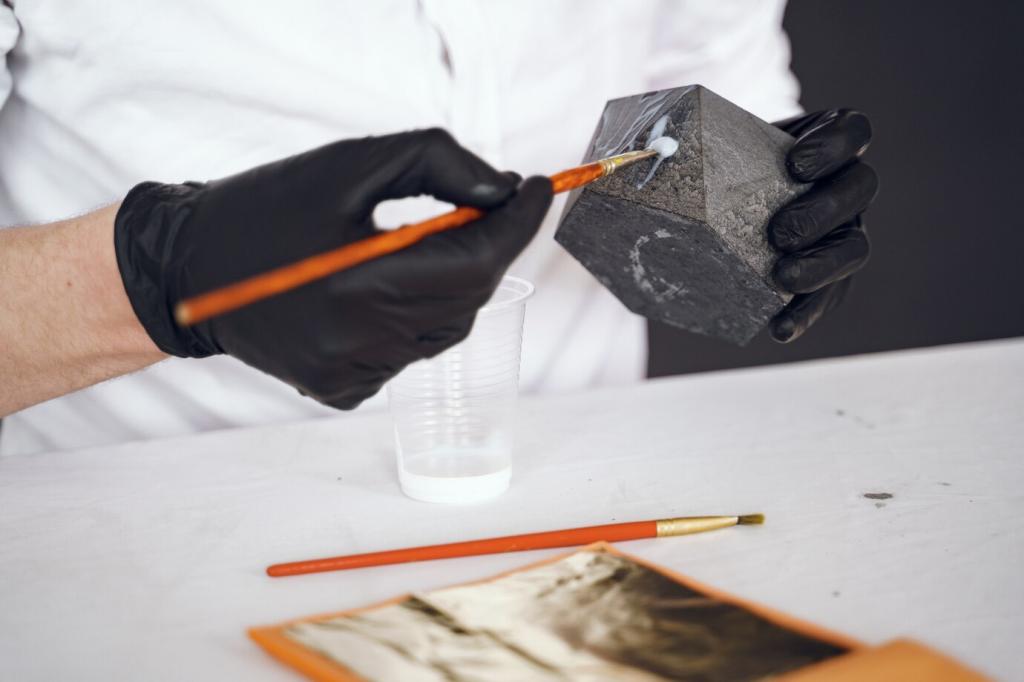
Consolidate friable gesso with a gentle, reversible adhesive before any sanding. For worm-eaten wood, secure structure first. We once saved a church molding by injecting adhesive along a hairline split. Describe your object’s weaknesses, and we’ll recommend targeted consolidation rather than blanket saturation.
Preparing the Surface: Gesso, Bole, and Consolidation
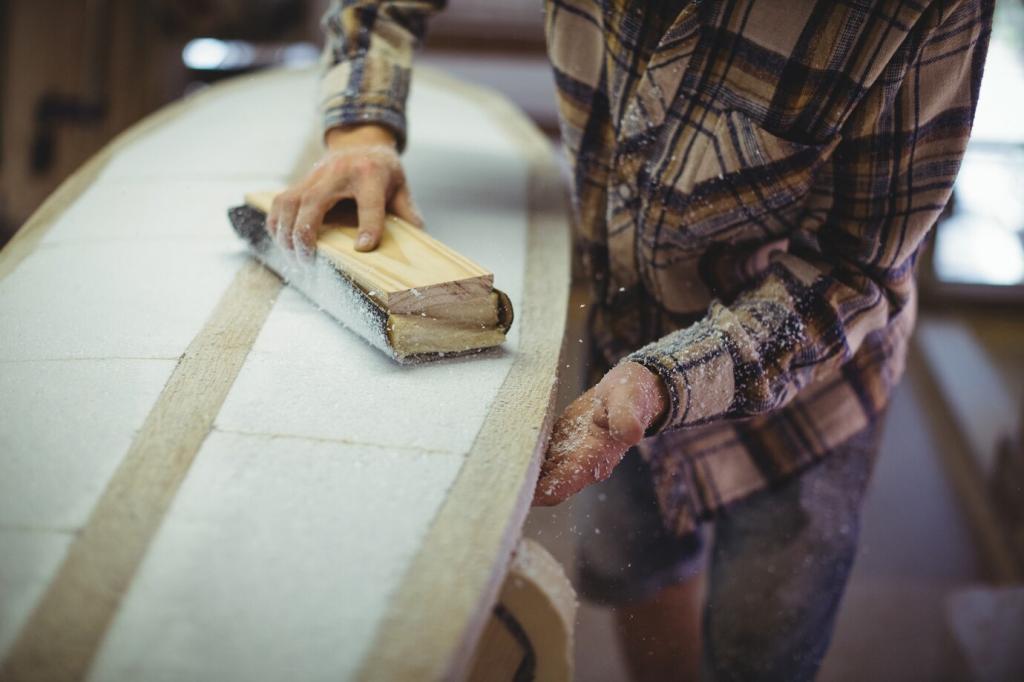
Apply multiple thin coats of warm gesso, sanding between passes to a marble-smooth plane. Fill losses with gesso putty, carving details while still leathery. Share your sanding grits and problem spots; our subscribers often trade clever tricks for crisp edges around delicate ornament.
Mold surviving details with silicone putty and cast composition or gesso fills, then carve crisp undercuts. A fan shared how a single intact leaf rescued an entire wreath motif. Post your casting challenges; we’ll troubleshoot shrinkage, adhesion, and alignment before you commit to gilding.
Glaze with toned shellac or acrylic mediums to nudge hue, reduce raw shine, and match aged fields. Dusting, selective abrasion, and pigment speckling simulate time. Upload before-and-after shots; our readers love discussing the subtle moment when new leaf truly disappears into history.
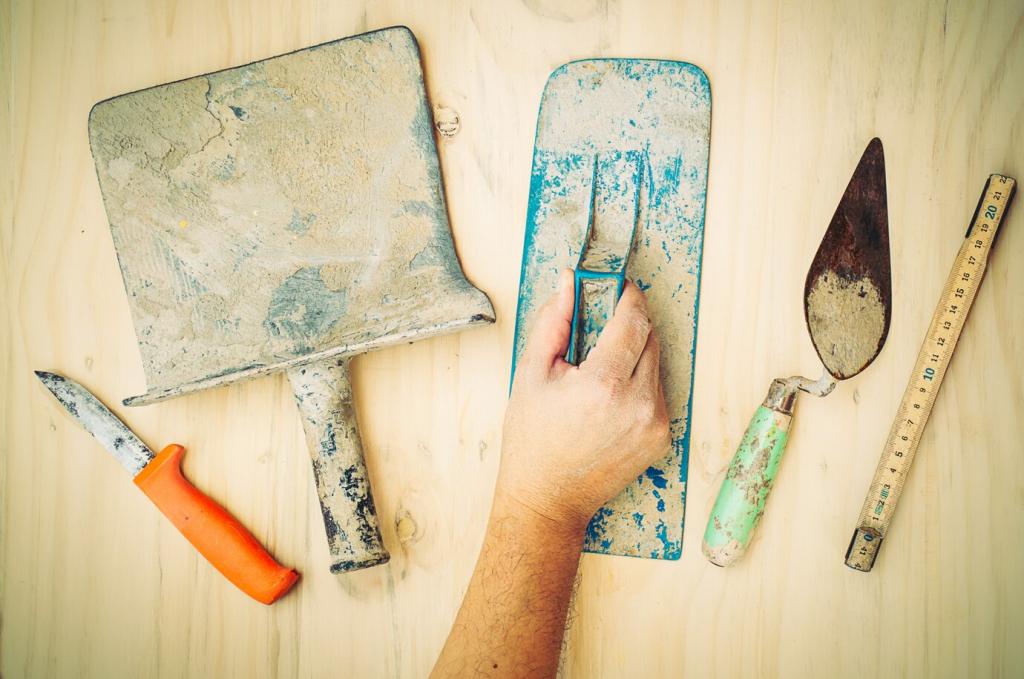
A keen gilder’s knife and suede cushion let you cut leaf precisely; a squirrel-hair tip lifts without tearing. Practice cutting squares to fit ornament rhythms. Tell us which motions challenge you most—curves, corners, or flats—and we’ll tailor drills for steadier hands.
Stable humidity prevents wood movement that cracks gesso. Avoid sulfur sources near silver; choose low-UV lighting. Our readers report success with microclimate frames in city apartments. Ask for our environmental checklist and share your room conditions for tailored, practical recommendations.
Cleaning Without Damage
Dust with a soft, clean brush; avoid sprays and aggressive rubbing that can scratch or lift leaf. Test in unobtrusive areas first. Tell us your cleaning routine and tools, and we’ll suggest safe upgrades that respect delicate toning layers and protective coatings.
Engage, Learn, and Share
Post your in-progress photos, subscribe for technique breakdowns, and join monthly Q&A sessions focused on Gold and Silver Leaf Restoration. The more you share challenges and victories, the more precise our guidance becomes—helping every reader protect beauty that outlives us all.