
Restoring Vintage Metal Artifacts: Bringing Timeworn Metal Back to Life

Reading Metal Like a Conservator

Patina vs. Corrosion: Knowing What to Keep

Distinguish noble patina, which tells the artifact’s story, from active corrosion that threatens its survival. Stable brown oxides on iron or mellow brass tones deserve preservation, while powdery green bronze disease demands intervention. Share how you judge the line.

Alloy Clues and Period Details

Simple tests reveal a lot: magnet checks for steel, weight and color hints for brass or bronze, thread profiles, tool marks, and maker’s stamps. These cues help date the artifact and guide appropriate methods. Comment with your favorite identification tricks.

Provenance, Value, and Respect

Before polishing, ask whose hands held the object and why it matters. Reversible, minimal treatments often preserve value better than aggressive shine. If you’ve faced a tricky ethics call, tell us how you balanced beauty, history, and utility.

Tools, Safety, and a Thoughtful Bench Setup

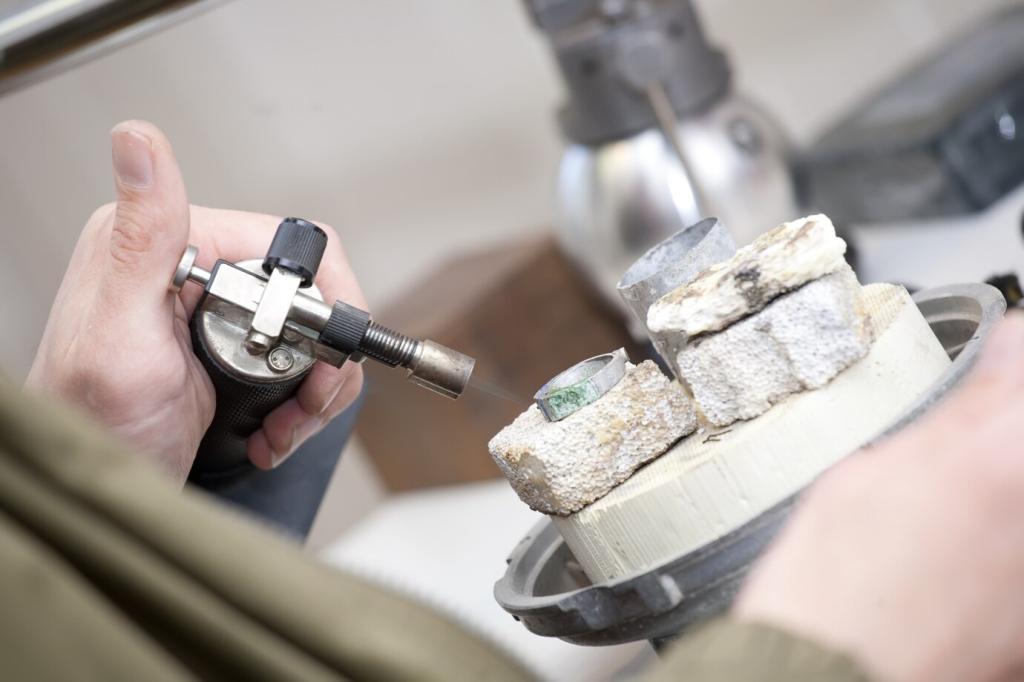
Stock soft-bristle brushes, bamboo skewers, dental picks, jeweler’s files, and micro-mesh abrasives. Keep separate kits for iron and nonferrous metals to avoid cross-contamination. Label everything clearly and store originals in trays to prevent accidental mixing.

Tools, Safety, and a Thoughtful Bench Setup

Wear gloves, eye protection, and a respirator when appropriate. Ventilate generously, especially around solvents, old paint, or cadmium plating. Assume lead-based coatings are present until proven otherwise. Share your go-to safety checklist so newcomers can learn from your routine.

This is the heading

Lorem ipsum dolor sit amet, consectetur adipiscing elit. Ut elit tellus, luctus nec ullamcorper mattis, pulvinar dapibus leo.
This is the heading

Lorem ipsum dolor sit amet, consectetur adipiscing elit. Ut elit tellus, luctus nec ullamcorper mattis, pulvinar dapibus leo.
Repair Techniques That Honor Original Craft

Low-Heat, Low-Risk Fixes

Soft solder can stabilize tinplate or thin brass without over-heating. Use heat sinks, pre-clean joints meticulously, and keep flux residues minimal. When in doubt, stop and reassess. What gentle fix saved a delicate hinge or handle for you?

Wax, Oil, and Lacquer—Choosing Wisely

Microcrystalline wax offers invisible protection and easy maintenance. Light oil can stabilize iron in low-humidity environments. Lacquer may suit polished brass if history supports it. Explain your go-to finish and why it respects the artifact’s era.

Period-Correct Looks and Special Treatments

Black japanning on cast iron, browned steel, or controlled bluing can recreate authentic finishes when documentation exists. Always test on scrap, record recipes, and keep changes reversible. Invite readers to vote on finish options for future projects.
We cataloged parts, photographed wiring routes, and noted maker’s marks hidden under the base felt. Old catalogs confirmed the finish was satin lacquer, not mirror polish. Have you uncovered a surprising detail mid-research? Tell us in the comments.

Case Study: A 1920s Brass Desk Lamp Reborn

Dry cleaning revealed stable patina and minor dents. A cautious citric bath lifted grime, then neutralization and waxing sealed the look. We rewired with cloth-covered cord, preserving original sockets. Share your favorite step in lamp restorations—rewiring, straightening, or finishing.

Case Study: A 1920s Brass Desk Lamp Reborn

Bonsaidukkani
Privacy Overview

This website uses cookies so that we can provide you with the best user experience possible. Cookie information is stored in your browser and performs functions such as recognising you when you return to our website and helping our team to understand which sections of the website you find most interesting and useful.